Is DeepSeek GDPR Compliant? EU Scrutiny, China Data Transfers & Business Risks
Last reviewed: September 7, 2026 (every regulator source rechecked against its primary document). The underlying analysis dates from August 25, 2026.
Third-party source check — September 7, 2026. Every regulator source on this page — the Italian Garante, the EDPB, the European Commission and the Berlin Commissioner — is linked to its own primary document, and each action is dated in the text where it is described. Those links were confirmed to resolve on this date. Regulatory positions change; check the linked document before relying on it, and note that this page is not legal advice.
DeepSeek AI under EU scrutiny is no longer just a technology headline; it is a serious GDPR compliance issue. DeepSeek should not be assumed GDPR-compliant for every EU use case. For consumer-facing services covered by DeepSeek’s current Privacy Policy, the policy states that personal data is directly collected, processed, and stored in the People’s Republic of China. The official API, downstream applications, third-party endpoints, and self-hosted deployments require separate GDPR assessments.
The debate around DeepSeek and GDPR is especially important for companies, public bodies, DPOs, and employees who may enter personal, client, legal, financial, HR, or confidential data into an AI system. For DeepSeek services covered by its Privacy Policy, DeepSeek describes collection of prompts, uploaded files, chat history, device and network data, logs, approximate location, and other personal data, and states that personal data for those services is directly collected, processed, and stored in the People’s Republic of China.
The official API and downstream applications require a separate GDPR assessment because DeepSeek’s consumer Privacy Policy expressly excludes end-user personal data collected through downstream Open Platform applications.
Note: This article is for general information only and does not constitute legal advice.
Quick Answer
| Question | Short answer |
|---|---|
| Is DeepSeek GDPR compliant? | EU users and businesses should not assume compliance by default for consumer-facing services covered by the Privacy Policy; the exact use case must be assessed. |
| Why are EU regulators concerned? | Transparency, lawful basis, data-subject rights, EU territorial scope, representative obligations, security, and transfers of EU personal data to China. |
| Is it safe for EU businesses to use DeepSeek? | Not for personal or confidential business data unless the organization has completed vendor due diligence, contract review, transfer analysis, and technical controls. |
| Is self-hosting DeepSeek different from using the public app? | Yes. A self-hosted or private deployment can reduce transfer and training risks, but it does not remove GDPR obligations. |
DeepSeek AI Under EU Scrutiny: Why Regulators Are Concerned
DeepSeek attracted European regulatory attention because its chatbot service became widely used very quickly while its privacy and data-transfer practices raised questions under the GDPR. In January 2025, Italy’s data protection authority, the Garante, asked Hangzhou DeepSeek Artificial Intelligence and Beijing DeepSeek Artificial Intelligence to explain what personal data they collected, from which sources, for what purposes, on what legal basis, and whether the data was stored on servers in China. The Garante also asked what information was used to train the AI system and how users were informed if personal data had been collected through web scraping.
Two days later, the Italian authority ordered an urgent limitation on processing Italian users’ data, saying the companies’ response was unsatisfactory and that the service was still being offered to people in the EU, specifically in Italy. The Garante’s order identified issues including cooperation with the authority, transparency, legal basis, data-subject rights, security, and the lack of an EU representative at the time of the order. DeepSeek’s current privacy policy now names Prighter Group as a privacy representative for the EU and UK, but organizations should still verify the scope, effectiveness, and contractual relevance of that arrangement.
The issue also moved beyond Italy. At its February 2025 plenary meeting, announced on February 12, 2025, the European Data Protection Board decided to create a task force on AI enforcement to support cooperation among EU data protection authorities. That announcement does not name DeepSeek, and we do not claim it does: it is cited here as the EU-level enforcement context in which the national actions below took place, not as a finding about DeepSeek. Checked September 7, 2026.
July 2026 EDPB Guidance on Anonymisation and AI Web Scraping
On July 7, 2026, the European Data Protection Board adopted Version 1.0 of two sets of guidelines for public consultation: Guidelines 02/2026 on Anonymisation and Guidelines 03/2026 on Web Scraping in the Context of Generative AI. The EDPB announced them on July 8, 2026, and the consultation remains open until October 30, 2026. They are adopted consultation versions, not final guidance.
The anonymisation guidelines explain that whether information is anonymous can depend on the perspective and capabilities of the relevant entity. They use three practical criteria: no record isolation, no linkage, and no inference. Pseudonymisation, redaction, or removal of direct identifiers should not automatically be described as successful anonymisation.
The web-scraping guidelines address private-sector scraping of internet sources for generative-AI training. They say the GDPR applies where scraping involves personal-data operations such as collection, storage, organization, or retrieval, and emphasize purpose limitation, transparency, data minimisation, accuracy, role allocation, and a case-by-case lawful-basis analysis. When legitimate interests are used, the interest, necessity, and balancing tests must be satisfied. Processing special-category data generally requires both an Article 6 lawful basis and an Article 9(2) exception.
These guidelines are not a DeepSeek-specific enforcement decision and do not by themselves determine whether a particular deployment complies with the GDPR. They do raise the evidence needed for claims that scraped training data is anonymous, minimal, transparent, or lawfully processed.
DeepSeek and GDPR: The Core Compliance Questions
The GDPR does not apply only to companies established in the EU. It can also apply to non-EU organizations that offer goods or services to people in the EU or monitor their behavior. That is why a China-based AI company may still fall within GDPR scope when it provides an app or web service to EU users.
For DeepSeek GDPR compliance, the main questions are:
| GDPR issue | Why it matters |
|---|---|
| Territorial scope | If the service is offered to EU users, GDPR may apply even if the provider is outside the EU. |
| Transparency | Users must understand what personal data is collected, why, how long it is kept, and who receives it. |
| Legal basis | Each processing purpose needs a lawful basis, such as contract, consent, legitimate interests, or legal obligation. |
| Data-subject rights | EU users must be able to exercise rights such as access, deletion, objection, restriction, and portability. |
| EU representative | Non-EU controllers subject to GDPR may need a written EU representative under Article 27. |
| Security of processing | Controllers must protect personal data appropriately, especially where sensitive or high-risk data may be entered. |
| International transfers | Transfers outside the EEA require an adequacy decision, appropriate safeguards, or a narrow derogation. |
| AI training and scraping | Training models on personal data raises questions about transparency, purpose limitation, minimisation, lawful basis, and rights. |
DeepSeek’s current privacy policy has added more European-region language, including legal bases, rights, and a privacy representative contact. But disclosure alone does not prove that every processing activity, transfer, retention practice, or business use case is GDPR-compliant.
What Personal Data Does DeepSeek Collect?
DeepSeek’s current privacy policy says it may collect personal data in several ways, including data provided by the user, automatically collected data, and data from other sources. The categories include:
| Category | Examples |
|---|---|
| Account data | Email address, phone number, username, password, date of birth where applicable |
| Prompts and user inputs | Text input, voice input, prompts, uploaded files, photos, feedback |
| Chat history | User conversations and model-generated outputs |
| Device data | Device model, operating system, device identifiers, system language |
| Network data | IP address, cookies, unique identifiers |
| Log data | Features used, actions taken, diagnostic and performance logs |
| Approximate location | Location inferred from IP address |
| Public personal data | Publicly available personal data that may be obtained via online sources to train models |
| Payment data | Payment order and transaction data for paid Open Platform/API services; DeepSeek says this is not applicable to the DeepSeek App. |
This matters because prompts and uploaded documents can easily contain personal data, even when the user does not think of them as “data.” A customer support transcript, employment dispute, contract, health note, invoice, spreadsheet, email chain, or screenshot may include names, contact details, personal opinions, financial information, or sensitive data.
DeepSeek’s policy also says the service is not designed or intended to process sensitive personal data and tells users not to provide it. That warning is important, but it does not eliminate risk if users or employees still paste sensitive or confidential information into the public app.
The China Data-Transfer Issue
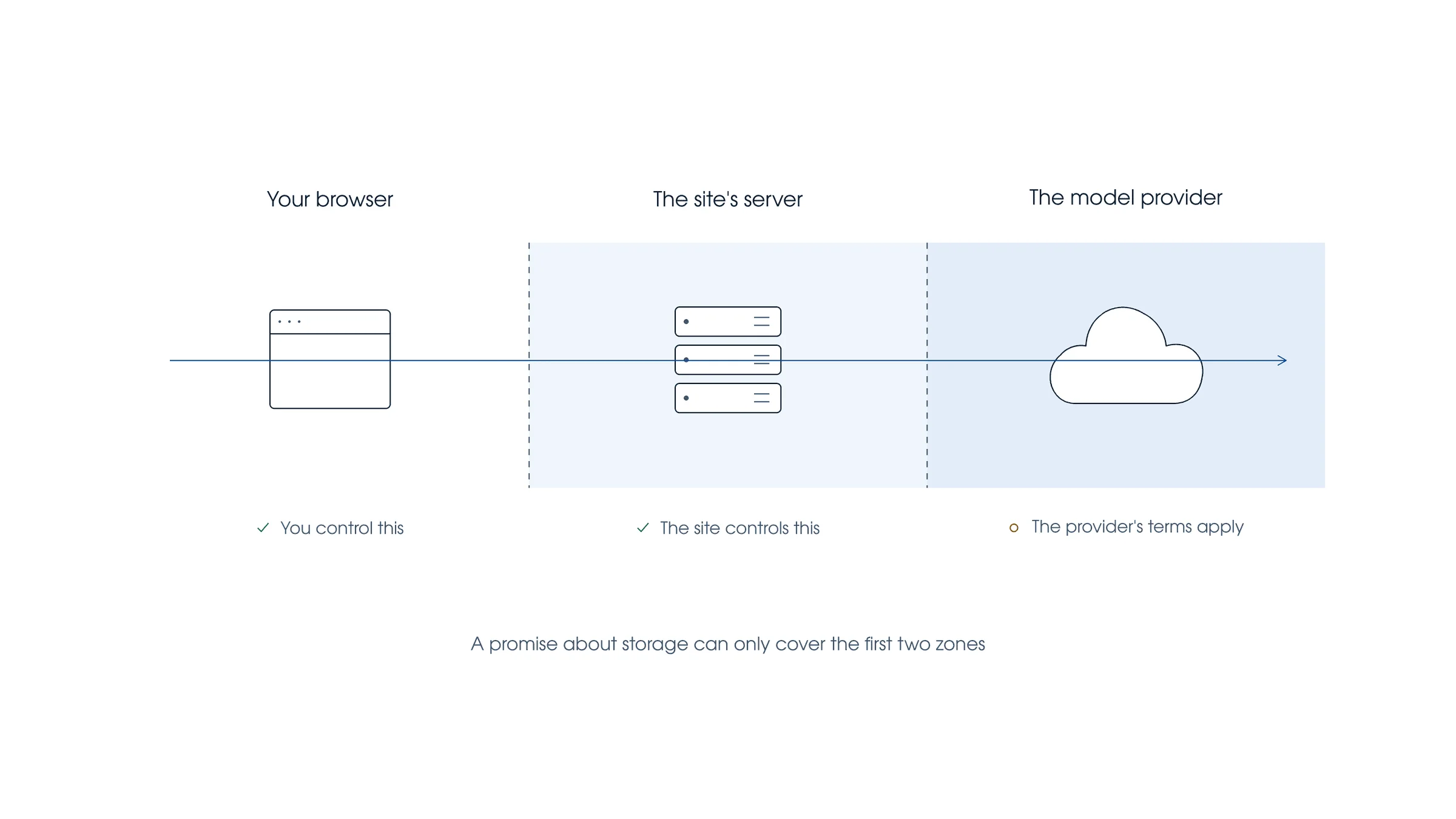
The central DeepSeek privacy concern in Europe is the DeepSeek data transfer to China. Under EU data protection rules, personal data does not lose GDPR protection when it leaves the EU. The European Commission explains that personal-data transfers to third countries generally need either an adequacy decision, appropriate safeguards such as Standard Contractual Clauses or Binding Corporate Rules, or specific derogations.
China is the key risk point for the consumer-facing services covered by DeepSeek’s current Privacy Policy because that policy says personal data for those services is directly collected, processed, and stored in the People’s Republic of China. This statement does not establish the region for every API or downstream deployment.
The Berlin Commissioner for Data Protection stated in June 2025 that DeepSeek transfers personal data from German users to Chinese data processors and stores it on servers in China. The same press release said the EU has not issued an adequacy decision for China and that DeepSeek had not provided convincing evidence that German users’ data would be protected in China at a level equivalent to the EU.
For EU businesses, this means the question is not simply “Where is DeepSeek based?” The real compliance questions are: What personal data is being sent? Where is it processed? Who can access it? What transfer mechanism is used? Are enforceable rights and effective remedies available? Has a Transfer Impact Assessment been completed? Are technical safeguards strong enough?
What Italy’s Garante Did
Italy’s Garante acted quickly. On January 28, 2025, it asked DeepSeek’s operators to provide details about personal data collection, data sources, processing purposes, legal basis, storage in China, training data, and possible web scraping. It gave the companies 20 days to respond.
On January 30, 2025, the Garante ordered an urgent and immediate limitation on processing Italian users’ data. The authority said the companies’ communication was “entirely unsatisfactory” and noted that the companies claimed they did not operate in Italy and that European legislation did not apply. The authority disagreed and opened an investigation.
In the formal order, the Garante stated that DeepSeek was offered to data subjects in the EU, specifically Italy, and therefore Article 3(2)(a) GDPR applied. It also found issues involving Articles 31, 12, 13, 14, 6, 32, 27, and Chapter III rights.
What Germany’s Berlin Data Protection Authority Said
Germany’s Berlin Commissioner took a different enforcement route. In June 2025, the Commissioner notified Apple and Google in Germany that the DeepSeek app constituted illegal content because of allegedly unlawful transfers of personal data to China. The press release said the app was offered in Germany via the Apple App Store and Google Play Store with a German-language description and could be used in German, making it subject to the GDPR.
The Berlin authority specifically referenced Article 46(1) GDPR and said DeepSeek had been asked in May 2025 either to remove its apps from German app stores, stop the illegal transfer of personal data to China, or fulfill the requirements for lawful third-country transfers. The authority then used the Digital Services Act route to notify Apple and Google.
This is why app stores became part of the enforcement path: if an app is considered illegal content or linked to unlawful data processing, regulators may pressure platform operators to review whether it should remain available.
Is DeepSeek GDPR Compliant Today?
The balanced answer is: EU organizations should not approve consumer-facing DeepSeek services covered by the current Privacy Policy by default for personal or confidential data without a documented GDPR assessment, transfer analysis, contract review, and technical controls.
DeepSeek’s latest privacy policy is more detailed than the early documentation reviewed by regulators. It includes an EEA, Switzerland, and UK section, a table of legal bases, data-subject rights, an opt-out reference for training or optimization, and a privacy representative contact.
However, those additions do not automatically resolve every GDPR issue. Compliance still depends on the actual processing, transfer mechanism, contracts, safeguards, security controls, retention practices, and deployment model.
Editorial note: The risk levels below are this site’s screening labels for prioritizing review; they are not ratings issued by a regulator and do not replace legal advice.
| GDPR requirement | Why it matters for DeepSeek | Risk level |
|---|---|---|
| Transparency | Users need clear, granular information about collection, purposes, retention, sharing, training, and transfers. | Medium–High |
| Legal basis | Each use of prompts, logs, location, training data, and public personal data needs a valid lawful basis. | High |
| Data-subject rights | EU users must be able to exercise access, deletion, objection, restriction, and complaint rights effectively. | Medium–High |
| International transfers | China-based storage or processing requires lawful transfer safeguards and effective remedies. | High |
| Security | Prompts and uploads may contain sensitive or confidential information. | High |
| Representative in the EU | Current policy names a privacy representative, but organizations should verify scope and effectiveness. | Medium |
| AI training and web scraping | Training on user or public personal data raises purpose limitation, minimisation, transparency, and objection issues. | High |
| Business use / DPA | Companies need a DPA, clear processor/controller roles, retention terms, audit rights, and transfer terms. | High |
For consumer users, DeepSeek may be acceptable for low-risk, non-personal prompts. For EU companies, public-sector bodies, and regulated organizations, consumer-facing DeepSeek services covered by the current Privacy Policy should not be approved for personal or confidential data unless the organization has documented the legal basis, transfer mechanism, contractual terms, security controls, retention rules, and user-rights process.
Can Companies Use DeepSeek in a GDPR-Compliant Way?
Possibly, but only under strict controls. A company should not allow employees to use the public DeepSeek app for personal data or confidential business data unless it has completed a proper compliance review.
A safer approach may involve:
- Avoiding the public consumer app for personal data.
- Using a self-hosted or private deployment where possible.
- Keeping data in the EEA where technically and contractually feasible.
- Disabling model-training or service-improvement use where the relevant product and account provide such a setting, and verifying any API no-training commitment in the applicable contract.
- Signing a Data Processing Agreement where the provider acts as processor.
- Using SCCs or another lawful transfer mechanism if third-country transfers occur.
- Completing a Transfer Impact Assessment for China-related transfers.
- Conducting a DPIA where the use is likely to be high risk.
- Applying prompt filtering, access controls, audit logging, and data-loss prevention.
- Prohibiting staff from entering client, HR, legal, health, financial, children’s, or confidential data.
- Documenting vendor due diligence, risk decisions, and user instructions.
Self-hosting can reduce the risk of sending prompts to DeepSeek’s hosted service. But it does not remove GDPR duties. The organization still needs a lawful basis, data minimisation, security controls, retention rules, user rights processes, and governance over how the AI system is used.
DeepSeek Public App vs API vs Self-Hosted Model
Editorial note: The GDPR-risk labels in this comparison are screening labels used by this site, not regulator ratings. Actual risk depends on the data flow, role allocation, contracts, safeguards, and jurisdiction.
| Deployment model | Data control | Storage location | Training risk | DPA availability | GDPR risk | Suitable use cases |
|---|---|---|---|---|---|---|
| Public app / web service | Low | For services covered by the current Privacy Policy, personal data is processed and stored in the PRC | Higher unless settings and policy prove otherwise | Not enough to assume | High | Low-risk public information, no personal or confidential data |
| API / downstream application | Depends on the application architecture and contract | No universal API region is established by the public documentation reviewed | Must be verified for the exact relationship | Application-specific assessment required | Editorial review required; no universal rating | Controlled use only after data mapping, lawful-basis review, retention design, transfer analysis, and technical safeguards |
| Self-hosted / private deployment | Higher | Chosen by the organization | Lower if no external training or telemetry | Internal governance still needed | Lower–Medium | Enterprise use with EEA hosting and strict controls |
The key difference is control. With the public app, the user accepts the provider’s default data flow. With API use, contractual terms may define processing more clearly. With self-hosting, the company can keep prompts inside its own infrastructure, but it becomes responsible for securing and governing the system.
Vision and Files API: Additional GDPR Checks
DeepSeek’s Vision API can process images supplied through Base64, an external URL, or a Files API file_id. Images may contain faces, names, identity documents, health information, location clues, children, screens, financial records, or other personal and special-category data.
The Files API currently stores images only. A developer may set an expiration between one hour and 30 days; if no expiration is set, the official documentation says the image is kept permanently. Developers can explicitly delete stored files.
For an EU application, the operator should document the purpose and lawful basis for image processing, minimise the image before upload, avoid special-category data unless a valid exception applies, define expiry and deletion, disclose downstream processing, and include stored files in its retention schedule, records of processing, DPIA where required, and data-subject-rights workflow.
DeepSeek’s Open Platform Terms require developers providing downstream applications to disclose their personal-information processing rules, establish consent or another legal basis, respond to rights requests, and implement organizational and technical safeguards. GDPR controller and processor roles must still be determined from the actual facts and contracts of each integration.
Practical Checklist Before Using DeepSeek in the EU
Before approving DeepSeek for any EU business use, ask:
- Have we mapped what data users may enter?
- Are we entering personal data?
- Are we entering confidential business data?
- Do we have a lawful basis for the processing?
- Do we know whether DeepSeek is a controller, processor, or independent provider for our use case?
- Do we have a DPA where required?
- Are transfers outside the EEA involved?
- Is there an adequacy decision or valid transfer safeguard?
- Have we completed a Transfer Impact Assessment?
- Have we completed a DPIA where required, using current EDPB or national supervisory-authority guidance rather than relying on an unapproved draft template?
- Can users exercise GDPR rights effectively?
- Do we know retention periods?
- Does the application accept images through Base64, external URLs, or
file_id? - Is a Files API expiration explicitly set, is deletion verified, and are stored images included in the retention schedule and records of processing?
- Can the application locate and delete a stored image when responding to a valid rights request?
- Are controller and processor roles based on the actual contract and data flow rather than a generic label?
- Are anonymisation claims tested against the EDPB’s no-record-isolation, no-linkage, and no-inference criteria?
- If web-scraped personal data is involved, have purpose limitation, transparency, minimisation, accuracy, Article 6, and Article 9 requirements been assessed?
- Which model-training or service-improvement settings apply to the exact product and account, and does the API contract provide an explicit no-training commitment?
- Can we prevent staff from uploading sensitive or confidential data?
- Is there a safer EU-hosted, private, or self-hosted option?
What EU Users Should Do
Individual EU users should treat the public DeepSeek app as a high-caution tool for privacy. Do not enter sensitive personal information, medical information, financial details, legal documents, employment disputes, passport data, children’s data, private photos, or confidential third-party information.
For business users, the safest rule is to avoid entering personal or confidential data into DeepSeek’s public consumer service. For API use, map the complete data flow and verify the Open Platform Terms, caching, logging, retention, transfer mechanism, downstream privacy notice, and contractual safeguards. For self-hosted use, confirm that prompts, outputs, logs, backups, monitoring, and support data remain within the approved environment.
Conclusion
DeepSeek AI under EU scrutiny is a GDPR issue because regulators are concerned about transparency, legal basis, user rights, security, EU territorial scope, representative obligations, AI training practices, and especially transfers of personal data to China.
For EU businesses, the safest position is not to treat consumer-facing DeepSeek services covered by the Privacy Policy as GDPR-compliant by default for personal or confidential data. A compliant use case may require a documented deployment-specific assessment, verified hosting and transfer facts, contractual safeguards, a DPA where applicable, SCCs where relevant, TIA/DPIA documentation, access controls, retention and deletion controls, and strict rules on what users may enter.
DeepSeek may be a powerful AI tool, but under GDPR, technical capability is not enough. The compliance question is about data flows, legal basis, transparency, enforceable rights, security, and accountability.
FAQ
1. Is DeepSeek GDPR compliant?
DeepSeek should not be assumed GDPR-compliant by default for EU personal data, especially when using consumer-facing services covered by its current Privacy Policy. Compliance depends on the deployment model, data entered, legal basis, contracts, transfer safeguards, and current privacy controls.
2. Why is DeepSeek AI under EU scrutiny?
DeepSeek is under EU scrutiny because regulators questioned its handling of personal data, transparency, legal basis, user rights, AI training practices, and transfers of personal data to China.
3. Does DeepSeek store EU user data in China?
For services covered by DeepSeek’s Privacy Policy, the policy states that personal data is directly collected, processed, and stored in the People’s Republic of China. EU organizations should not extend that statement automatically to every API or self-hosted deployment; instead, they should verify the precise data flow, transfer mechanism, and contractual terms for the selected deployment.
4. Can EU companies use DeepSeek legally?
Possibly, but only after a proper GDPR assessment. Companies should avoid the public app for personal data, verify contract terms, complete transfer assessments, consider DPIA requirements, and implement technical controls.
5. Is DeepSeek safe for business data?
The public app should not be treated as safe for confidential business data by default. Companies should avoid entering client data, legal documents, HR records, financial information, source code, trade secrets, or regulated data unless a compliant enterprise or private setup is in place.
6. Is self-hosting DeepSeek more GDPR-friendly?
Self-hosting can be more GDPR-friendly because it may keep prompts, files, and outputs within the organization’s own environment. However, the organization still needs lawful basis, data minimisation, retention rules, security, access control, and user-rights processes.
7. What should I avoid entering into DeepSeek?
Avoid entering sensitive personal data, confidential company data, client documents, legal files, health information, financial data, children’s data, HR records, authentication secrets, and anything subject to contractual or regulatory confidentiality.